
The Weight of Poverty
Crime and PunishmentPoverty first appears as bodily deprivation and social shame, then shapes family sacrifice and becomes part of Raskolnikov’s justification for desperate action.
increasing Bearing strength in each event
 decreasing
Bearing strength in each eventdecreasingThe Garret and the Debt
The Garret and the Debt
A Narrow Existence
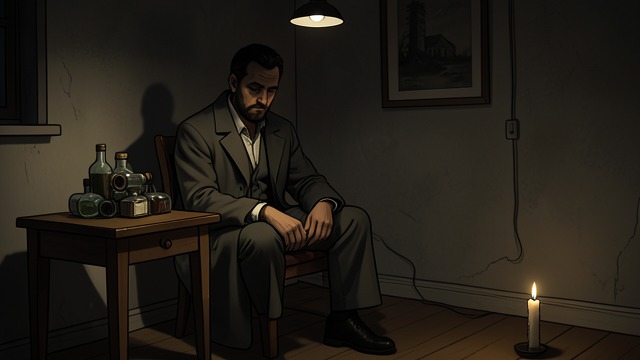
Raskolnikov lives in a low, cupboard-like garret, has scarcely eaten, and owes money to his landlady. The confined room and unpaid obligations narrow his attention toward survival and escape.
His poverty does not simply make him anxious about money. He has become detached from practical problems, allowing deprivation to coexist with an unusually consuming private idea.
Pawning the Watch
Pawning the Watch
A Father’s Possession
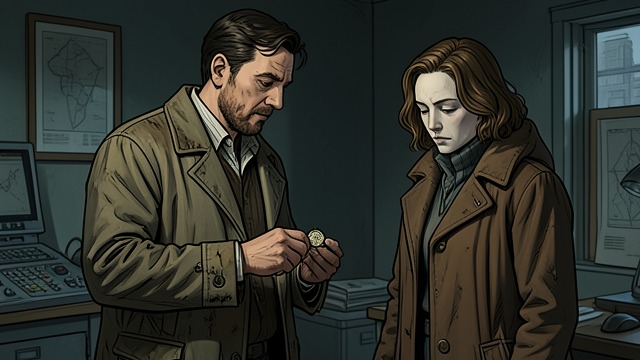
Raskolnikov offers his father’s watch to Alyona Ivanovna and receives far less than he asks. The transaction emphasizes his lack of bargaining power and the pawnbroker’s control over desperate borrowers.
He accepts the money because he has nowhere else to turn. At the same time, he studies the apartment, making a degrading financial necessity serve another purpose.
The Marmeladov Example
The Marmeladov Example
Poverty as Exclusion
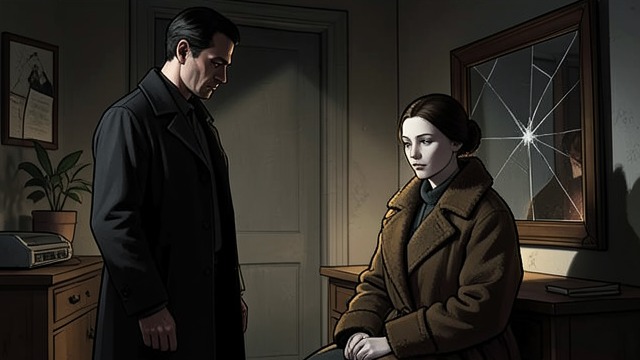
Semyon Zaharovitch Marmeladov tells Raskolnikov that poverty preserves some dignity, while beggary humiliates a person before the world. His own life shows how financial collapse and alcoholism reinforce one another.
His family’s hardship is visible in hungry children, Katerina Ivanovna’s illness, and Sofya Semyonovna Marmeladova’s sacrifice. The story presents poverty as a force that reaches beyond the person who lacks money.
A Sister’s Financial Bargain
A Sister’s Financial Bargain
Debt Behind the Engagement
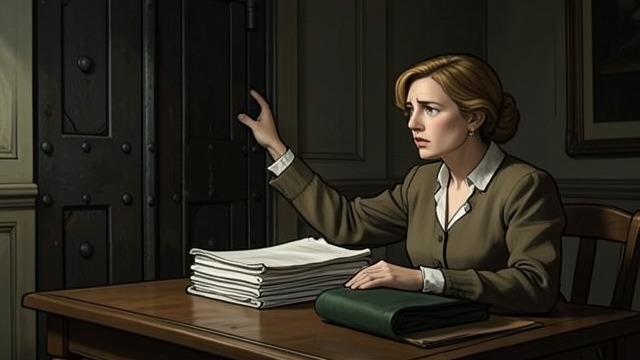
Raskolnikov learns that Dounia had accepted an advance while working as a governess and that her family borrowed money to support him. Her engagement to Luzhin therefore arrives within a history of financial obligation.
The mother hopes that Luzhin may help secure Raskolnikov’s future. Raskolnikov instead sees the marriage as another form of a loved one paying a price for his needs.
A Crime Against Need
A Crime Against Need
Motive Without Rescue
Raskolnikov has imagined Alyona Ivanovna’s money as a possible answer to deprivation and wasted opportunity. Yet, after killing her, he neither develops a plan to aid the poor nor uses the stolen objects to secure his family’s future.
The distance between intended usefulness and actual paralysis exposes the weakness of his economic justification. Poverty explains the pressure around him, but it cannot by itself make the violence a remedy.
Early July, before the first pawnshop visit
The first evening, at Alyona Ivanovna’s apartment
The first evening, during the tavern conversation
Before the letter reaches Raskolnikov
The evening of the murders
